Breakfast in Panama: 7 Essential Spots
From traditional Panamanian dishes to stylish brunch cafés, these breakfast spots are the perfect way to kick off your day…
Peruvian Ceviche is one of the most iconic local dishes, yet understanding it begins long before the first bite. It’s connected to the country’s daily food culture, from the fish arriving at dawn to the lime, chili, and herbs sold in Lima’s bustling markets. Unlike many of Peru’s hearty traditional dishes or the comforting meals served in the highlands, ceviche belongs to a brighter, fresher side of the cuisine, the kind locals turn to on warm days or after exploring the city’s busy streets.
You’ll find it everywhere, from simple lunch spots to more polished restaurants, each preparing it with their own balance of heat and acidity. And though street food has its own set of classics, ceviche is a dish that tells a different story about Peru: one shaped by the ocean, tradition, and the belief that the freshest ingredients need very little to shine.
For anyone discovering Latin cuisine, Peruvian ceviche is the perfect place to start, a dish that captures the country’s spirit in the most refreshing way.
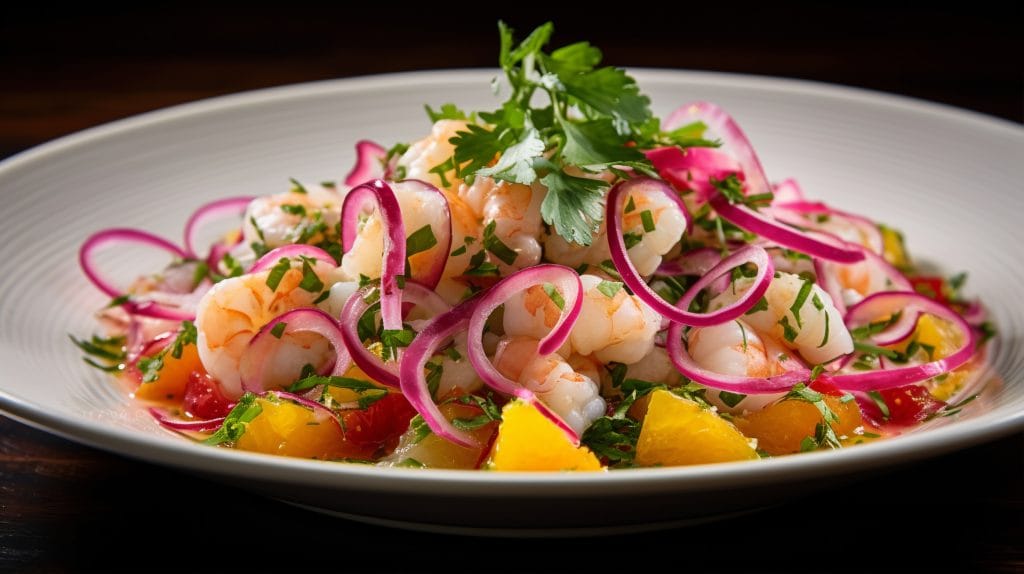
Peruvian ceviche isn’t just about the ingredients; it’s about the balance of flavor. The right amount of lime, the proper type of chili, and the perfect cut of fish all make a difference. Each element plays a precise role, and even small adjustments can completely transform the final result. Too much lime can overpower the fish, while too little leaves the dish flat. The chili should add heat and aroma without masking freshness, and the fish must be impeccably fresh, firm, and cut with intention to achieve the ideal texture.
At the heart of this iconic preparation is the idea of contrast. Acidity meets sweetness, heat meets freshness, and softness meets crunch. This balance is what makes the dish feel light yet satisfying, simple yet complex. In Peru, it is often eaten earlier in the day, when the fish is at its freshest, and the flavors feel clean and energizing. It is not uncommon to see people enjoying it for lunch rather than dinner, treating it as a daily ritual instead of a special occasion meal.
Different regions of Peru also put their own spin on this classic, shaped by geography, climate, and local ingredients. In the north, particularly in coastal areas, you’ll find versions with stronger, bolder flavors. These preparations may include yellow peppers, garlic, or a slightly longer marinating time, resulting in a more intense taste. The northern style often feels warmer and more robust, reflecting the regional preference for pronounced seasoning and deeper flavor profiles.
Along the central coast, where Lima has helped popularize this dish internationally, the approach tends to focus on clarity and precision. Fish is marinated very briefly, sometimes for only a few minutes, allowing its natural flavor and texture to remain front and center. The citrus-based marinade, known as leche de tigre, is usually lighter, fresher, and carefully seasoned to complement rather than dominate the seafood. This method highlights technique and restraint, proving how simplicity can still be deeply expressive.
In the Amazon region, the recipe takes on an entirely different character. River fish replace the typical ocean varieties, introducing new textures and flavors that feel earthier and more delicate. Citrus fruits native to the region may be used in place of lime, and herbs or aromatics unique to the Amazon can appear in the marinade. These versions feel closely tied to the surrounding environment, showing how the preparation adapts far beyond the coast while maintaining its core identity.
This traditional dish is also inseparable from its accompaniments. In Peru, it is commonly served with sides that balance acidity and heat. Sweet potato adds softness and sweetness, while corn provides texture and contrast. These elements are not decorative; they are essential to the experience, offering relief between bites and creating a more complete plate.
For those who aren’t fans of raw fish, there are many variations that preserve the spirit of the recipe while adjusting the ingredients. Mixed versions are especially popular, often combining shrimp, squid, or octopus. These proteins may be lightly blanched or cooked before being marinated, making the dish more approachable while still preserving freshness and brightness. Each seafood brings its own texture, adding complexity and interest.
Vegetarian interpretations have also become increasingly common, particularly in urban kitchens and modern restaurants. Mushrooms, hearts of palm, avocado, or even roasted vegetables can replace fish entirely. When prepared thoughtfully, these options focus on texture and acidity, ensuring the final result still feels vibrant and satisfying. Rather than imitating seafood, these versions celebrate vegetables in their own right.
What makes this Peruvian specialty truly special is its adaptability. While there are traditional rules and respected techniques, the preparation continues to evolve. Home cooks experiment with different chilies, citrus blends, and garnishes, while chefs reinterpret the dish using contemporary methods. Despite these changes, the essence remains the same: freshness, balance, and respect for ingredients.
This preparation also represents a broader philosophy within Peruvian cuisine. It values local products, seasonal eating, and minimal manipulation. The goal is not to hide ingredients but to elevate them. That mindset has helped Peruvian food gain international recognition, with this dish often serving as many people’s first introduction to the country’s culinary culture.
Learning about this iconic recipe goes beyond following instructions. It involves understanding why each step matters, how ingredients interact, and how regional context influences flavor. Whether enjoyed at a seaside stand, a family table, or recreated at home, it offers more than taste. It provides insight into Peruvian culture, geography, and everyday life.
No matter where you try it, ceviche is best enjoyed fresh and in good company. More than just a dish, it is a vibrant expression of Peru’s coastline, its ingredients, and its culinary heritage, a true celebration of flavor and tradition.
Our food tours in Peru invites you to experience that connection more deeply. In our hands-on cooking classes, you will step into a local kitchen and learn to prepare traditional Peruvian dishes under the guidance of an experienced chef. You will come away with new skills, cultural insight, and unforgettable memories to take home.
Step into the kitchen and experience Peru from the inside out!